
Plan solar cooling for farms and distributors
Unreliable electricity makes food storage expensive and unpredictable. A solar cold room can help farms and distributors, provided refrigeration, solar generation, storage, and backup are designed together.
This guide covers practical size, solar power, battery, and fixed-versus-containerized decisions, plus the information needed for a useful quotation.
Start with the product and workflow. Vegetables, fruit, fish, meat, dairy, flowers, and medicines have different temperature and humidity requirements. Record arrival temperature, target temperature, daily quantity, holding time, and dispatch schedule. A room for pre-cooled produce needs less refrigeration than one pulling down warm harvests.
Record seasonal peak intake, door openings, afternoon loading, and crate arrangements. These determine cooling demand alongside room dimensions; average stock alone can hide the busiest day's load.
Focusun’s cold storage and delivery system guide uses the same product-first approach. The objective is to connect cooling capacity with the actual arrival, holding, and delivery pattern.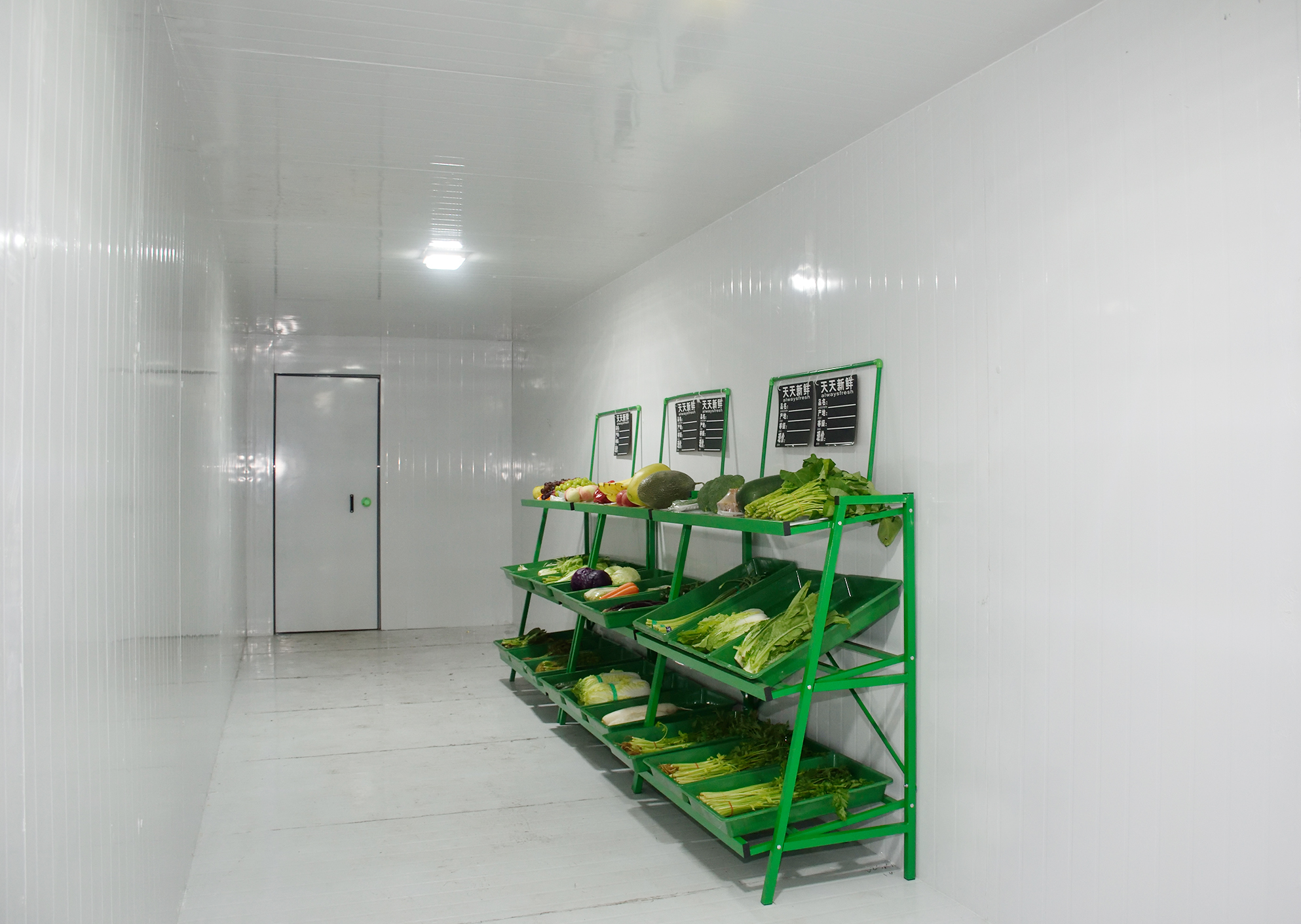
The refrigeration load comes from several sources: heat in incoming product, heat through insulated panels, warm air entering during door openings, lights and people, fans, and the evaporator defrost cycle. Solar equipment must also cover the compressor’s daily energy use, not only its nominal running power.
The largest mistake is to size a room from volume and ignore product pull down. If ten tonnes of warm produce arrive in one afternoon, the refrigeration system must remove that heat while maintaining the stored stock. Sometimes a separate pre-cooling step or refrigeration unit is more economical than making a storage room do everything.
Use the worst realistic ambient condition when comparing offers. A roof exposed to strong sun, frequent door opening, dusty condenser air, or a long delivery delay can raise the load. Ask the supplier to state the design ambient temperature and the product assumption. Without those figures, two “five-tonne” rooms may not be comparable.
The solar array must produce enough energy for daily refrigeration, fans, controls, and battery charging during the available sun hours. The battery must carry the load through night-time operation and short periods of cloud. A larger room does not always need a proportionally larger battery because insulation, product turnover, and compressor controls change the duty.
Designers normally start with a daily energy estimate, then check the local solar resource, panel orientation, inverter efficiency, battery depth of discharge, and seasonal worst case. If the battery is sized only for average sunshine, the system may work in a clear month and fail when clouds arrive. Ask for the autonomy target in hours or days and the assumed battery reserve.
Full off-grid operation is not the only sensible option. Many businesses use a hybrid system with solar as the first energy source and grid or generator backup during prolonged low-sun periods. This can reduce battery cost and protect product when a storm lasts longer than expected. The best choice depends on fuel availability, outage frequency, financing, and the cost of a spoiled batch.
A fixed room suits a permanent site with flexible dimensions and future expansion. A containerized room is attractive when deployment speed, relocation, or a remote site matters. Focusun’s containerized cold room collection is a useful starting point. Check foundation, drainage, access route, lifting requirements, and the distance to solar equipment before approving a container.
Insulation reduces cooling demand. Check panel and floor insulation, vapour seals, and door gaskets before enlarging the solar array. Locate the condenser where airflow is unobstructed.
Choose a door that matches the workflow. A small personnel door may be acceptable for boxed produce but slow down pallet loading. A wide door improves handling but increases air infiltration, so it needs a disciplined opening routine, fast closure, and possibly an air curtain or strip curtain. Keep evaporator clearance around stacked crates so cold air can circulate.
Humidity matters because condensation, frost, or dry air can shorten shelf life. See the cold room humidity control article for fresh or sensitive goods.
Monitor room temperature, battery state, solar production, compressor status, and door opening. Add product sensors for narrow tolerances. Define the alarm response and keep a local display for network outages.
Compare the room, refrigeration, inverter, batteries, mounting, wiring, foundation, shipping, installation, commissioning, monitoring, and service. Estimate battery replacement, cleaning, refrigerant service, and solar security. Value comes from reduced spoilage, better selling time, lower generator fuel, and possible pay-per-crate storage. Use conservative occupancy before discussing payback.
An AP report on solar cold storage describes the growing use of rental cold space in African food markets and notes that financing and reliable business models remain important.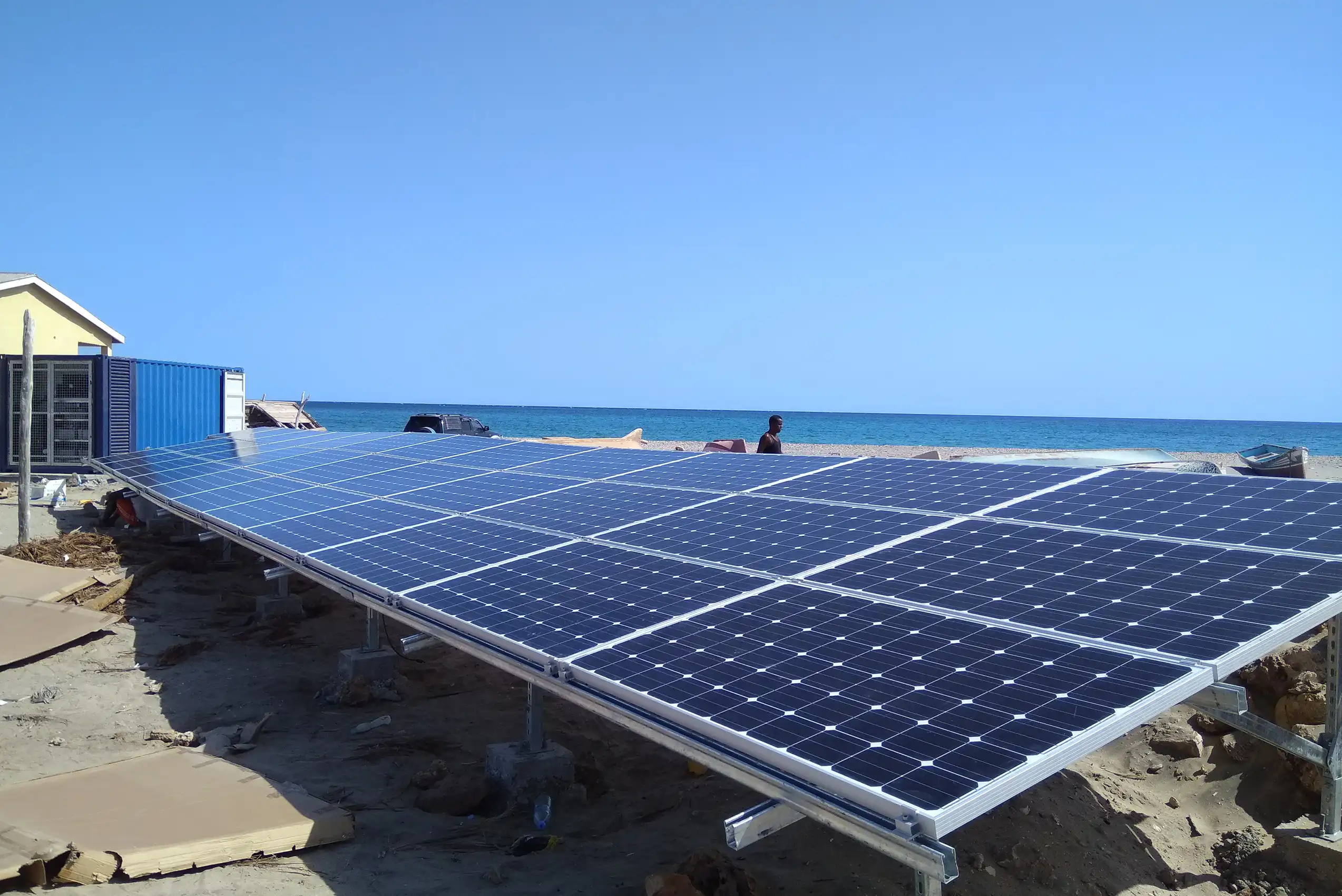
Send a supplier a short project brief with the information below. It helps the engineering team size refrigeration and solar equipment together.
|
Project item |
Information to provide |
Why it matters |
Decision to make |
|
Product |
Type, packaging, arrival temperature |
Sets storage and pull-down load |
Storage only or pre-cooling too |
|
Capacity |
Peak intake, daily turnover, holding time |
Sizes room and compressor |
Average stock or seasonal peak |
|
Temperature |
Target range, humidity, tolerance |
Sets controls and monitoring |
One product or several zones |
|
Power |
Sun hours, outages, generator access |
Sizes PV, battery, and backup |
Hybrid or full off grid |
|
Site |
Location, ambient, access, drainage |
Checks heat rejection and logistics |
Fixed or containerized room |
|
Service |
Local technician, security, connectivity |
Protects uptime and stock |
Remote alarms and spare parts |
Focusun offers solar powered cold room solutions, conventional cold room systems, and project support through its contact page. Share the location, product, peak load, target temperature, expected daily door openings, available utilities, and the number of hours of backup required.
The best solar cold room keeps product within specification, survives realistic weather and operating habits, and gives the owner a clear path to service, expansion, and revenue.
Solar cold room cost depends on room volume, product load, target temperature, insulation, PV capacity, battery autonomy, backup power, site work, shipping, and installation. A room that stores pre-cooled produce may need a much smaller system than one that pulls down warm harvests every afternoon. Ask for a line-item quotation that separates the cold room, refrigeration, solar array, inverter, batteries, controls, foundation, commissioning, and service. This makes competing offers easier to compare and exposes costly items that a single package price can hide.
Size the room from peak stock, daily intake, holding time, crate or pallet dimensions, aisle space, and door workflow. Then check the refrigeration load created by incoming product and the local ambient temperature. Floor area alone is not enough. A supplier should model the busiest realistic day and state whether the room is for storage only or also for pre-cooling. If your business is seasonal, provide both normal and peak volumes so the design can balance useful capacity with battery and PV cost.
Yes, a solar cold room can be designed for full off-grid operation, but it needs adequate PV generation, battery storage, controls, and a plan for long cloudy periods. Many projects use a hybrid arrangement with solar first and grid or generator backup because it reduces battery cost and protects product during extended bad weather. The quotation should state the autonomy target, battery reserve, worst-case solar assumptions, and the automatic changeover sequence. Never assume “solar powered” means uninterrupted cooling without checking these details.
Panel count cannot be chosen reliably from room dimensions alone. It depends on daily refrigeration energy, compressor efficiency, ambient temperature, door openings, insulation, local solar hours, inverter losses, battery charging, and the required reserve. A professional design starts with a daily load profile and then checks seasonal solar yield. Ask the supplier to show estimated kWh per day, PV capacity, battery usable capacity, and the assumed depth of discharge so you can see how the system behaves in cloudy weather.
Batteries are normally needed when the room must cool at night, during cloudy periods, or when the grid is unreliable. The required capacity depends on compressor duty, autonomy hours, battery chemistry, allowable depth of discharge, and the availability of a generator or grid connection. A hybrid system may use a smaller battery and automatic backup. The design should include battery ventilation, protection, monitoring, replacement planning, and a clear low-state-of-charge response so staff know how to protect the stored product. Check warranty conditions before purchase.
A containerized room can be faster to deploy, easier to relocate, and practical for remote collection points. A fixed room usually offers more flexible dimensions, permanent loading access, and simpler future expansion. Compare foundation work, transport, crane or forklift access, service clearance, solar equipment location, and local building requirements. The better choice depends on whether the site is permanent and how the business may grow. Request the complete installation scope, not only the insulated container price. Include transport and installation costs.
It can, if the products share a compatible temperature and humidity range and the loading pattern allows air to circulate. Fish, fresh produce, dairy, medicines, and frozen goods often need different conditions, so separate rooms or zones may be safer. Mixing warm incoming stock with finished chilled stock can also raise the room temperature. Ask the supplier to review product compatibility, packaging, ethylene or odour concerns, cleaning routines, and whether a dedicated pre-cooling stage is needed before storage. Separate incompatible goods where necessary.
Control the room temperature and humidity together. Use properly sealed insulated panels, sound door gaskets, strip curtains where useful, and an evaporator selected for the product. Avoid blocking airflow with tight stacks and keep warm product from overwhelming the storage space. The control system should record temperature trends and defrost events. If condensation, frost, or product drying has already appeared, provide photos, product type, setpoints, door frequency, and loading practice so the engineer can identify the real cause. Investigate recurring moisture problems promptly.
Maintenance includes cleaning condenser coils, checking fans and drains, inspecting door seals and insulation joints, testing temperature sensors and alarms, reviewing refrigerant performance, and keeping the battery and inverter within their service limits. Solar panels need safe cleaning and visual inspection, while cables and mounting hardware should be checked for heat, corrosion, and damage. Keep a log of room temperature, battery state, faults, and generator use. A preventive plan is cheaper than discovering a failure after a full harvest is loaded.
Send the site location, product and packaging, peak daily intake, target temperature, arrival temperature, room capacity, holding time, door openings, local ambient, available grid or generator, desired autonomy, and whether the room may expand. Photos of the site and a simple workflow sketch are useful. Also state security, drainage, road access, mobile connectivity, and local service expectations. With these details, Focusun can compare fixed or containerized construction and size refrigeration, PV, battery, controls, and backup as one system. State any planned capacity expansion.
