
Seafood quality is won or lost in the first few hours after catch, landing, processing, or display. Fish, shrimp, squid, shellfish, and fillets do not have the same thermal tolerance as many other food products. They warm quickly, bruise easily, release moisture, and lose market value when temperature control is delayed.
That is why flake ice for seafood is one of the most common cooling choices across fishing vessels, landing stations, fish markets, seafood processing plants, supermarkets, and export packing facilities. It is not only because flake ice is cold. The real value comes from its shape: thin, soft, loose flakes that spread easily around irregular seafood surfaces.
When seafood is packed with large hard ice pieces, contact points are limited. Some areas are cooled, while other areas stay warmer. Flake ice behaves differently. It fills gaps between fish, shrimp, and trays, creating better surface contact and faster heat removal. For buyers planning a seafood ice system, this makes flake ice one of the most practical options for daily preservation work.
For a broader view of how ice fits into the seafood cold chain, Focusun’s guide on fishery preservation ice solutions is a useful reference because it looks at ice selection from catch to cold room rather than treating the ice machine as a standalone purchase.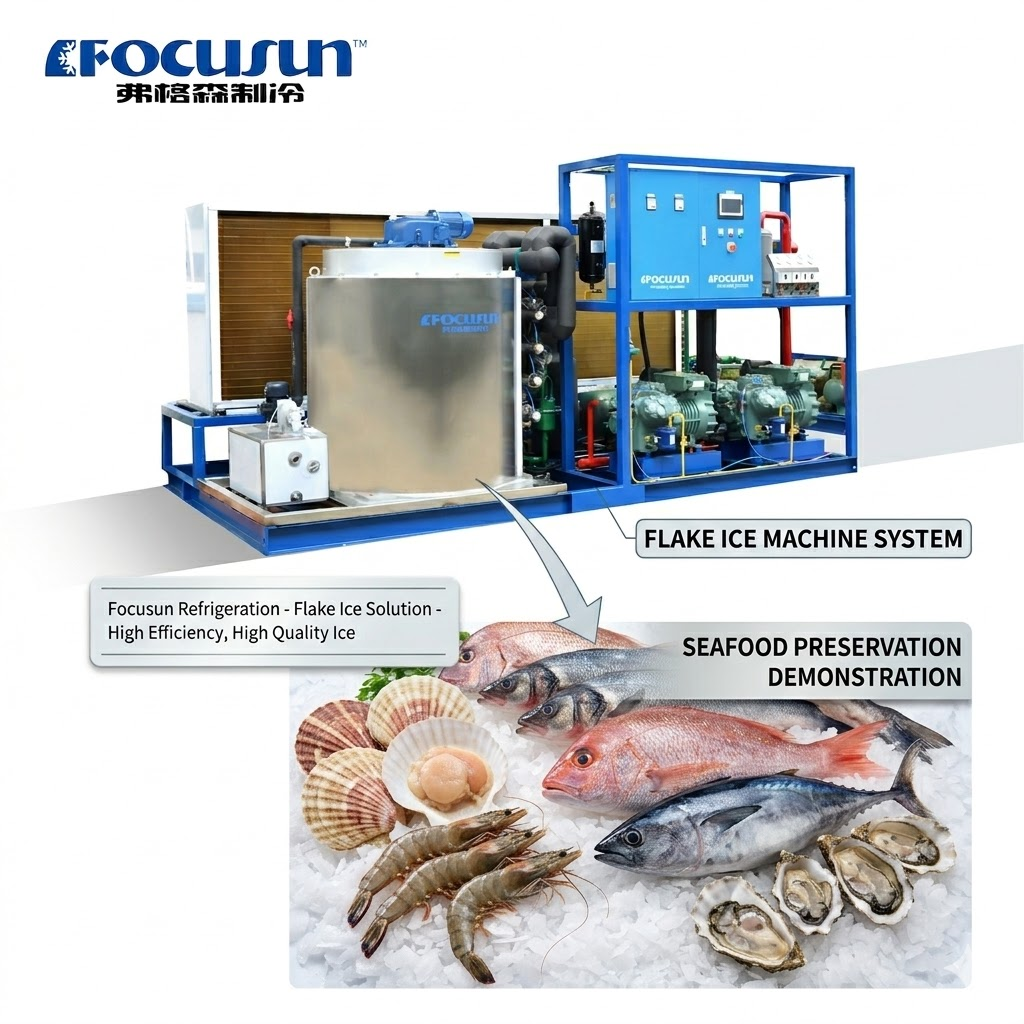
Seafood does not have a simple shape. Whole fish have curved bodies, shrimp settle into uneven layers, squid can be easily compressed, and fillets can be damaged by rough handling. A good seafood ice should cool quickly without creating unnecessary pressure or sharp impact.
Flake ice works well because it is:
|
Feature |
Why It Matters for Seafood |
|
Thin and soft |
Reduces physical damage to fish, shrimp, and fillets |
|
High surface contact |
Removes heat faster than large ice pieces |
|
Easy to spread |
Workers can layer it over trays, boxes, bins, and totes |
|
No crushing required |
Saves labor compared with block ice that must be crushed first |
|
Suitable for direct contact |
Useful for markets, receiving areas, processing lines, and packing |
|
Fast cooling response |
Helps reduce product temperature soon after catch or handling |
The cooling effect is not only about ice temperature. It is also about contact area. Large ice pieces may stay cold for longer, but they do not touch the seafood as evenly. Flake ice gives better coverage, especially when the product is loose, irregular, or handled in layers.
For seafood operations, this matters in several practical situations:
In these cases, flake ice is not just a cooling material. It becomes part of the handling method.
Different ice types can all be used in seafood operations, but they do not solve the same problem. The buyer should choose based on cooling speed, transport time, handling method, labor conditions, and product sensitivity.
|
Ice Type |
Best Use in Seafood |
Strength |
Limitation |
|
Flake ice |
Fish markets, processing lines, packing, short-term storage |
Fast surface cooling and easy handling |
Melts faster than block ice in long transport |
|
Block ice |
Long-distance transport, remote fishing areas, reserve ice supply |
Slow melting and long holding time |
Usually needs crushing before direct seafood contact |
|
Slurry ice |
High-value seafood, onboard pre-cooling, automated cooling tanks |
Rapid and uniform cooling |
Requires pumps, tanks, and more system design |
|
Tube ice |
Retail ice supply, catering, beverage, some display use |
Clean shape and good handling |
Less suitable for covering irregular seafood surfaces |
|
Plate ice |
Industrial cooling and some processing use |
Large capacity and strong cooling |
May need crushing or handling equipment |
A seafood buyer does not always need only one ice type. A larger fishery project may use flake ice for processing and packing, block ice for reserve storage, and cold rooms for temperature stabilization. For a technical comparison of ice machine types, Focusun’s industrial ice machine selection white paper gives a useful framework for comparing block, tube, and flake ice machines by application.
On fishing vessels, the first cooling point is often the most important. If fish stay warm on deck before icing, later cold storage cannot fully recover the freshness loss. Flake ice can be used immediately after catch to cover fish in boxes, bins, or storage compartments.
For marine use, equipment selection must consider salt exposure, vibration, limited space, power supply, and available water. In some vessel projects, seawater flake ice machines are considered because they reduce the need to store freshwater onboard. The key question is not only whether the machine can make enough ice, but whether it can operate reliably under marine conditions.
Dockside operations usually deal with uneven arrival patterns. A station may receive small volumes during normal days and very large volumes during peak catch periods. Flake ice is suitable here because it can be produced continuously, stored in bins, and distributed quickly to workers.
At the dock, ice must be available before the catch arrives. A common mistake is sizing the machine based on average daily landing volume. In seafood, the shortage usually happens during the busiest period, exactly when product value is highest.
Processing plants use flake ice in receiving, sorting, trimming, filleting, washing, temporary holding, packing, and dispatch preparation. In this environment, ice quality and material flow become as important as capacity.
A plant that produces 10 tons of ice per day may still struggle if workers must shovel ice manually over long distances. For larger projects, ice storage, screw conveyors, rake systems, or automatic distribution can reduce labor and keep ice closer to the production line.
Flake ice for seafood processing should be loose, clean, and easy to remove. Wet or compacted ice can slow down workers, create drainage problems, and make packing less consistent.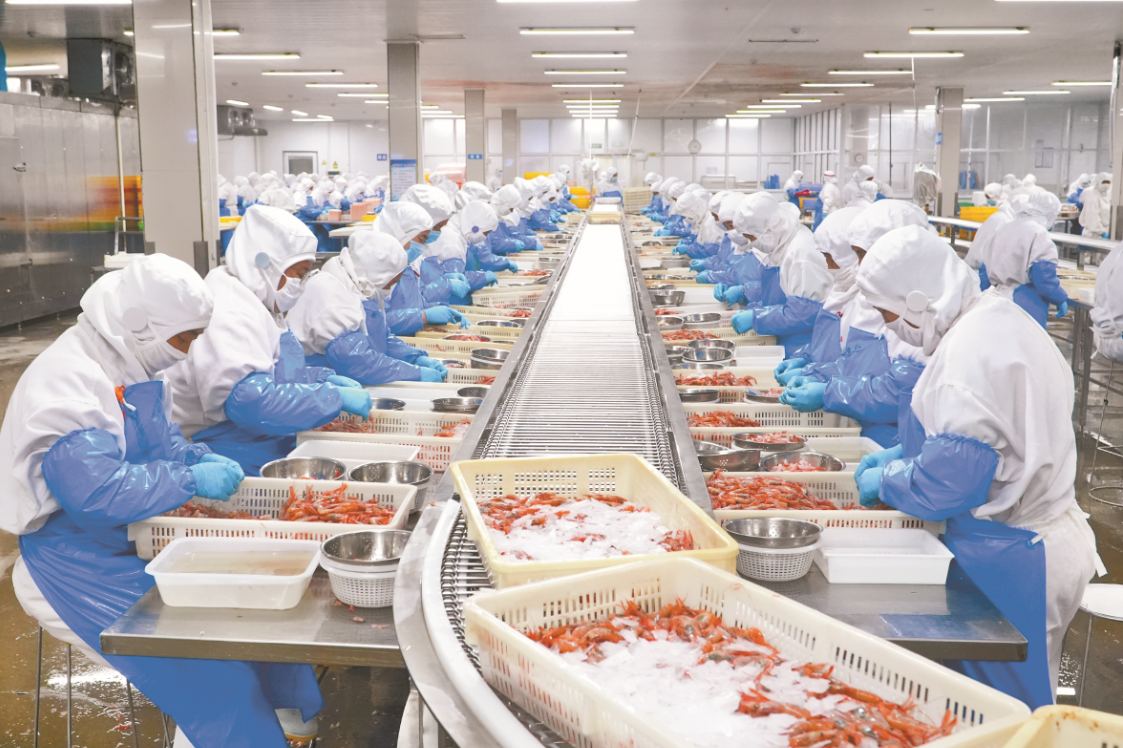
Retail seafood display needs a balance between appearance and preservation. Flake ice creates a clean bed for whole fish, shrimp, shellfish, and chilled seafood trays. Because it can be shaped easily, it helps staff build attractive displays while keeping products cold.
For supermarkets, daily demand may be lower than in a processing plant, but consistency matters. The machine should match store opening hours, cleaning routines, available space, and drainage conditions. Buyers should also consider whether the ice is only for display or also for back-room seafood storage and packing.
Export seafood often requires icing before truck loading, airport delivery, or container transport. Flake ice is useful for short and medium logistics routes where fast pull-down and direct contact are required.
However, flake ice alone does not replace cold storage. Ice removes heat from the product, while a cold room helps stabilize the seafood before dispatch. For operations that combine ice making, holding, and delivery, Focusun’s article on cold storage and delivery systems is relevant because it explains why product movement, door opening, loading patterns, and storage temperature must be planned together.
There is no single ice-to-seafood ratio that fits every project. The required ice depends on seafood type, incoming temperature, ambient temperature, handling time, storage method, transport distance, and whether the seafood is already chilled.
A practical starting formula is:
For many seafood operations, a preliminary planning range may look like this:
|
Application |
Typical Ice-to-Product Planning Range |
|
Fresh fish short-term handling |
20%–30% of seafood weight |
|
Fish market display |
25%–50%, depending on display hours and replenishment |
|
Shrimp or small seafood in boxes |
30%–50%, depending on ambient temperature |
|
Long holding before transport |
50% or more may be required |
|
Hot climate landing station |
Higher reserve is recommended |
|
Processing line cooling |
Based on hourly peak flow, not only daily volume |
Example calculation:
A seafood processor handles 8 tons of fish per day. The product is received warm, handled in a tropical climate, and requires icing at receiving, processing, and packing. The buyer chooses an estimated 35% ice ratio and adds 20% reserve capacity.
In this case, a 3-ton machine may be too tight. A 5-ton/day flake ice machine may be more practical, especially if the plant has peak receiving periods, high ambient temperature, or limited ice storage.
For a dockside project, the calculation should be based on peak landing volume. For example, if the normal daily volume is 10 tons but the peak-season landing volume reaches 18 tons, the machine should not be selected only around 10 tons. Otherwise, ice shortage will appear during the most profitable and most demanding period.
Capacity should match real demand, not just a rough estimate. Buyers should calculate:
If the machine is expected to run 24 hours per day, maintenance planning becomes more important. If the plant operates only one or two shifts, the machine may need a higher hourly output or a larger ice storage bin.
Freshwater flake ice machines are commonly used in fish markets, processing plants, supermarkets, and land-based facilities. Seawater flake ice machines are more suitable for fishing vessels or coastal operations where seawater is available and freshwater storage is limited.
This choice affects evaporator design, corrosion resistance, water treatment, maintenance, and ice characteristics. Buyers should not treat freshwater and seawater machines as interchangeable.
Dry, loose flake ice is easier to distribute and less likely to compact in storage. If the ice is too wet, it can form lumps, melt faster, and create drainage problems. For seafood packing, wet ice can also make the working area messy and reduce handling efficiency.
Important questions include:
Seafood environments are wet, salty, and cleaning-intensive. Equipment should be designed for corrosion resistance, cleaning access, and stable operation. Stainless steel contact parts, proper drainage, safe electrical layout, and accessible maintenance points are important.
For food processing plants, buyers should also check whether the machine design supports hygiene procedures, routine cleaning, and inspection. A low-cost machine that is difficult to clean can become expensive over time.
Air-cooled and water-cooled systems have different site requirements.
Air-cooled systems are easier to install where water is limited, but they need good ventilation and may lose performance in high ambient temperatures. Water-cooled systems can be more stable in hot environments but require reliable cooling water and water treatment.
Before choosing, confirm:
Seafood demand is often seasonal. A machine sized for normal days may fail during peak catch or holiday demand. Always calculate peak demand and reserve capacity.
An ice machine produces ice, but the operation needs ice at the right time. Without a suitable storage bin, workers may face shortages during rush periods even if the daily capacity looks sufficient.
Long manual ice transport wastes labor and increases melting. In larger plants, the ice route should be designed before installation. Storage bins, conveyors, screw systems, and discharge points should match the plant layout.
Block ice is useful for long holding, but it usually needs crushing before seafood contact. Flake ice is better for fast direct-contact cooling. Buyers should not compare only price per ton of ice without considering labor, handling speed, and product protection.
Flake ice cools seafood, but it does not control the entire environment. If seafood waits in a warm area after icing, quality can still decline. Cold rooms, chilled receiving areas, and refrigerated dispatch zones may be necessary.
Poor water quality can affect ice formation, machine scaling, hygiene, and maintenance frequency. Water filtration or treatment may be required, especially for food-contact applications.
A seafood ice system includes more than the ice maker. Storage, water treatment, installation, electrical work, drainage, spare parts, controls, delivery equipment, and after-sales support all affect total project cost.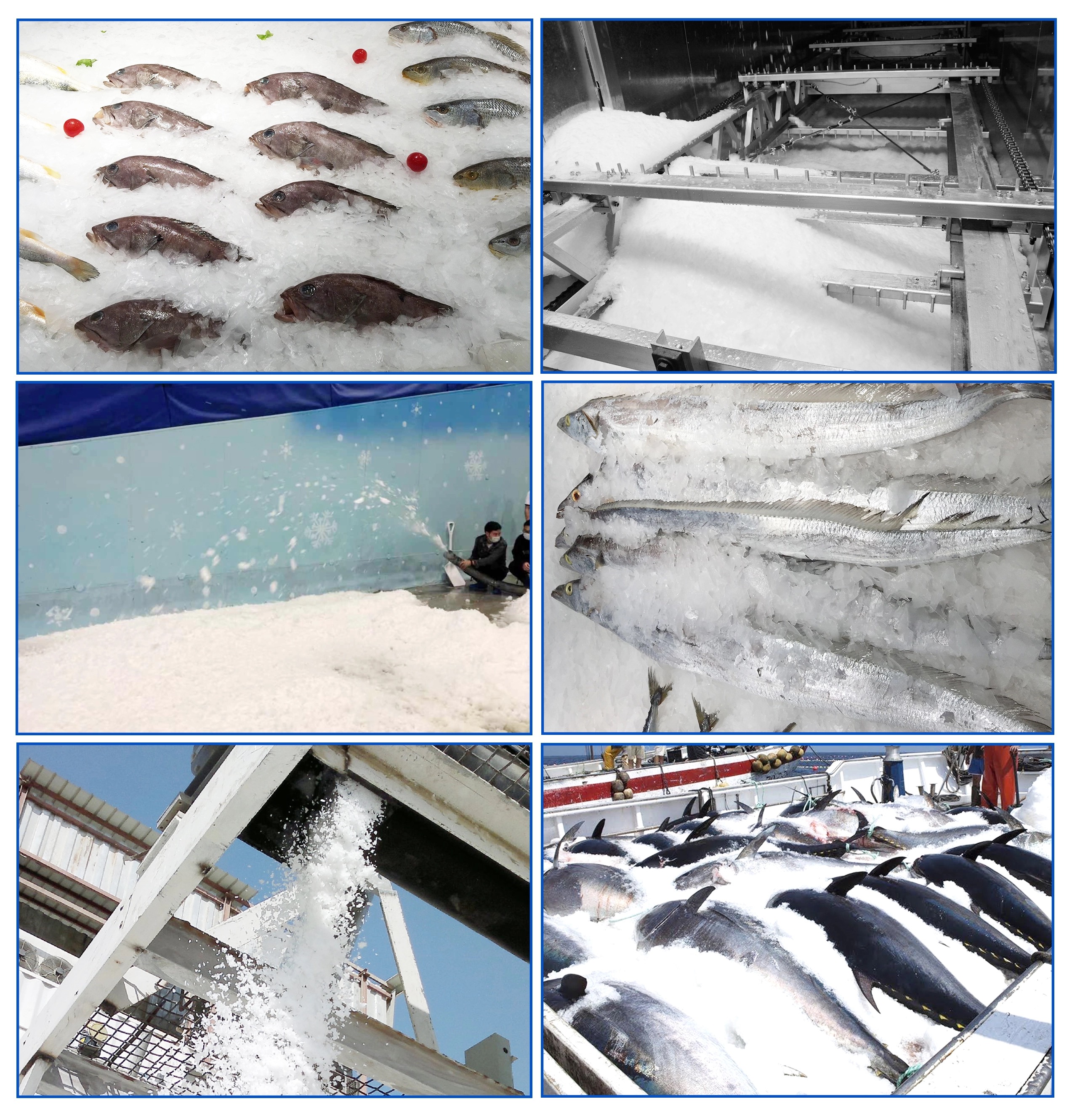
A small market sells whole fish, shrimp, and shellfish daily. The main need is display ice and some back-room storage ice. A small flake ice machine with a simple insulated bin may be enough. The buyer should focus on hygiene, drainage, quiet operation, and easy cleaning.
A landing station receives fish in waves from several boats. Peak volume is much higher than average daily volume. The project may require a medium or large flake ice machine, ice storage bin, and fast access for workers filling boxes and totes. Capacity should be based on peak unloading periods.
A plant handles whole fish and fillets. Ice is needed at receiving, trimming, packing, and dispatch. The project may require a larger flake ice machine, automatic ice storage, conveyors, and a cold room. The buyer should design the ice route and workflow before confirming machine size.
A vessel needs immediate onboard cooling. Space, power, seawater use, corrosion resistance, and vibration are critical. The machine must be compact and reliable. If seawater ice is required, the buyer should confirm marine-grade construction and maintenance procedures.
An exporter prepares seafood for refrigerated delivery. Flake ice is used for packing, but cold storage is also required before loading. The project should combine ice production, insulated storage, packing workflow, and dispatch temperature control.
Before requesting a quotation for a seafood flake ice machine or complete ice system, prepare the following information:
How much flake ice is needed per ton of seafood?
A common preliminary planning range is 20% to 50% of the seafood weight, but the correct ratio depends on product temperature, ambient temperature, handling time, and transport distance. For short-term fish market display, the ratio may be moderate because ice can be replenished during the day. For shrimp boxes, warm landing conditions, or longer holding before transport, the ratio should be higher. For accurate sizing, calculate both daily seafood volume and peak-hour demand.
Is flake ice better than block ice for seafood?
Flake ice is usually better for fast direct-contact cooling because it spreads easily and covers irregular seafood surfaces. Block ice is better when long melting time is the main priority, such as remote transport or reserve cooling. Many seafood operations use flake ice for daily handling and block ice where long-duration storage is needed. The better choice depends on whether the main problem is cooling speed, holding time, labor, or transport distance.
Can flake ice be used directly on fish and shrimp?
Yes, flake ice is widely used for direct contact with fish, shrimp, squid, shellfish, and other seafood. The machine and water system should be suitable for food-contact use, and the ice should be handled hygienically after production. For seafood processing plants, buyers should also consider storage bin cleanliness, drainage, worker handling, and whether the ice delivery route exposes ice to contamination.
What size flake ice machine is suitable for a seafood processing plant?
The size should be based on seafood volume, ice ratio, peak production, and reserve capacity. For example, if a plant processes 8 tons of seafood per day and uses a 35% ice ratio, the base ice demand is 2.8 tons/day. After adding reserve capacity, the buyer may need around 4 to 5 tons/day instead of choosing a 3-ton machine. If the plant has multiple icing points or seasonal peaks, the machine and storage bin should be sized more conservatively.
Does a seafood flake ice machine need an ice storage bin?
In most practical projects, yes. Ice demand is rarely perfectly equal to machine output. A storage bin provides buffer capacity during peak receiving, packing, and loading periods. Without storage, workers may wait for ice even when the machine has enough daily capacity on paper. The bin should be insulated, easy to clean, properly drained, and matched with the way workers or conveyors remove ice.
What affects the price of a flake ice machine for seafood?
Price is affected by daily capacity, freshwater or seawater design, compressor brand, evaporator material, condenser type, control system, refrigerant, frame material, ice storage, automation, installation conditions, and shipping destination. A simple small freshwater machine for a fish market costs much less than a complete seafood plant system with storage, conveyors, water treatment, and cold room integration. Buyers should compare total system cost, not only the machine body price.
What maintenance is required for a seafood flake ice machine?
Routine maintenance usually includes checking water quality, cleaning the water circuit, inspecting the evaporator and ice blade, checking refrigerant performance, cleaning the condenser, verifying electrical controls, and keeping the ice storage area sanitary. In seafood environments, corrosion control and drainage are especially important. For high-hour industrial operation, buyers should plan spare parts, maintenance intervals, and operator training before installation.
